

Content
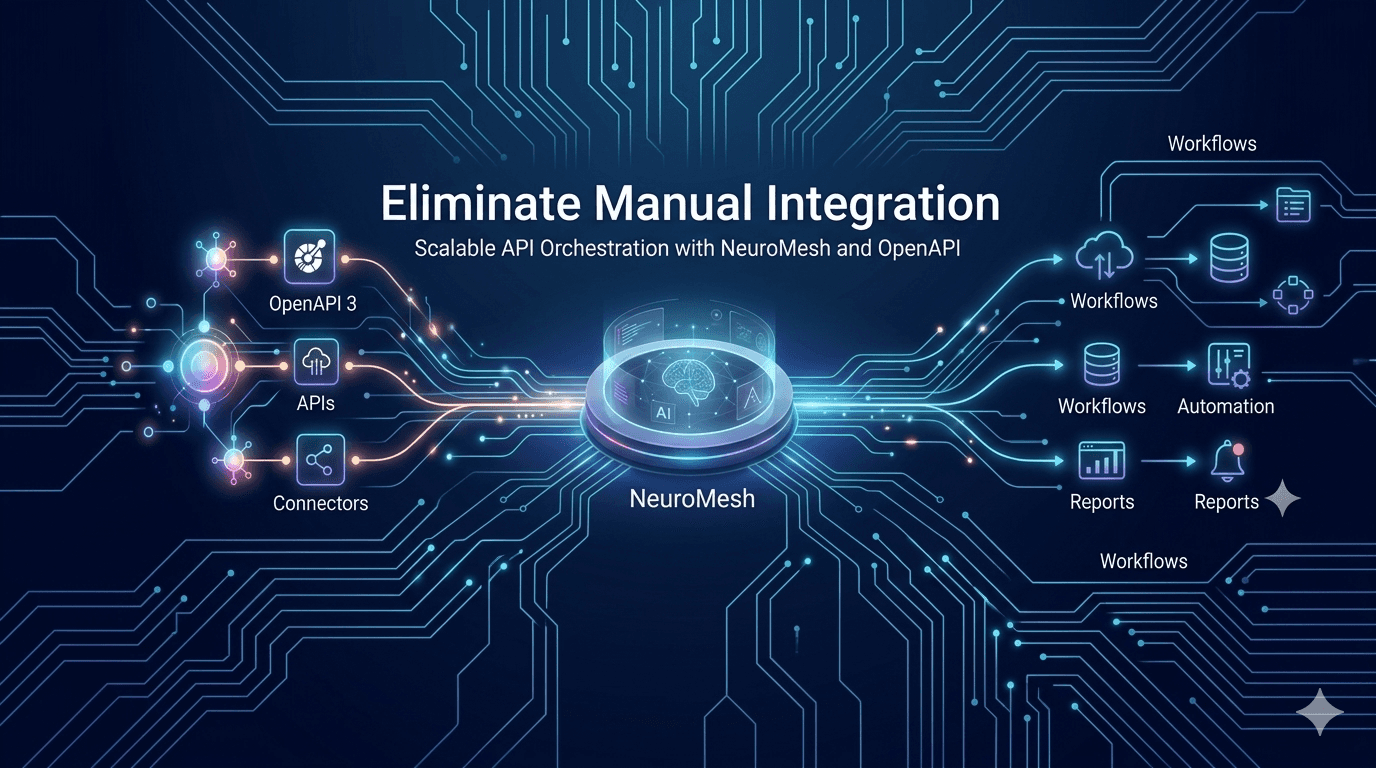
Modern enterprises operate across a wide ecosystem of applications, often relying on dozens, if not hundreds of APIs. While APIs enable modularity and scalability, integrating them manually introduces significant complexity. These integrations are often fragile, time consuming to build, and difficult to maintain as systems evolve.
Development teams frequently invest substantial effort in writing repetitive integration logic, handling authentication and error scenarios, and maintaining tightly coupled connections between services. As the number of integrations increases, this approach becomes increasingly unsustainable.
NeuroMesh addresses this challenge by enabling teams to visually orchestrate APIs and automatically generate connectors using OpenAPI 3.0 specifications, significantly reducing the need for manual integration effort.
Challenges of Manual API Integration
Traditional API integration approaches are inherently inefficient and difficult to scale. Developers often find themselves rewriting similar logic across multiple services, leading to duplication and increased maintenance overhead. Additionally, tightly coupled integrations reduce system flexibility, making changes more complex and risky.
The lack of centralized observability further complicates debugging and monitoring, especially in distributed environments. As organizations scale, these inefficiencies compound, resulting in slower development cycles and operational bottlenecks.
NeuroMesh: A Modern Integration Platform
NeuroMesh is a middleware orchestration platform that allows you to:
Design workflows using a visual interface
Connect multiple APIs seamlessly
Execute workflows in cloud, on-premise, or hybrid environments
Automate complex business processes with minimal coding
In essence, NeuroMesh converts integration from a code intensive task into a visual orchestration workflow, enabling faster delivery and more maintainable architectures.
OpenAPI 3.0: The Key to Zero Manual Connectors
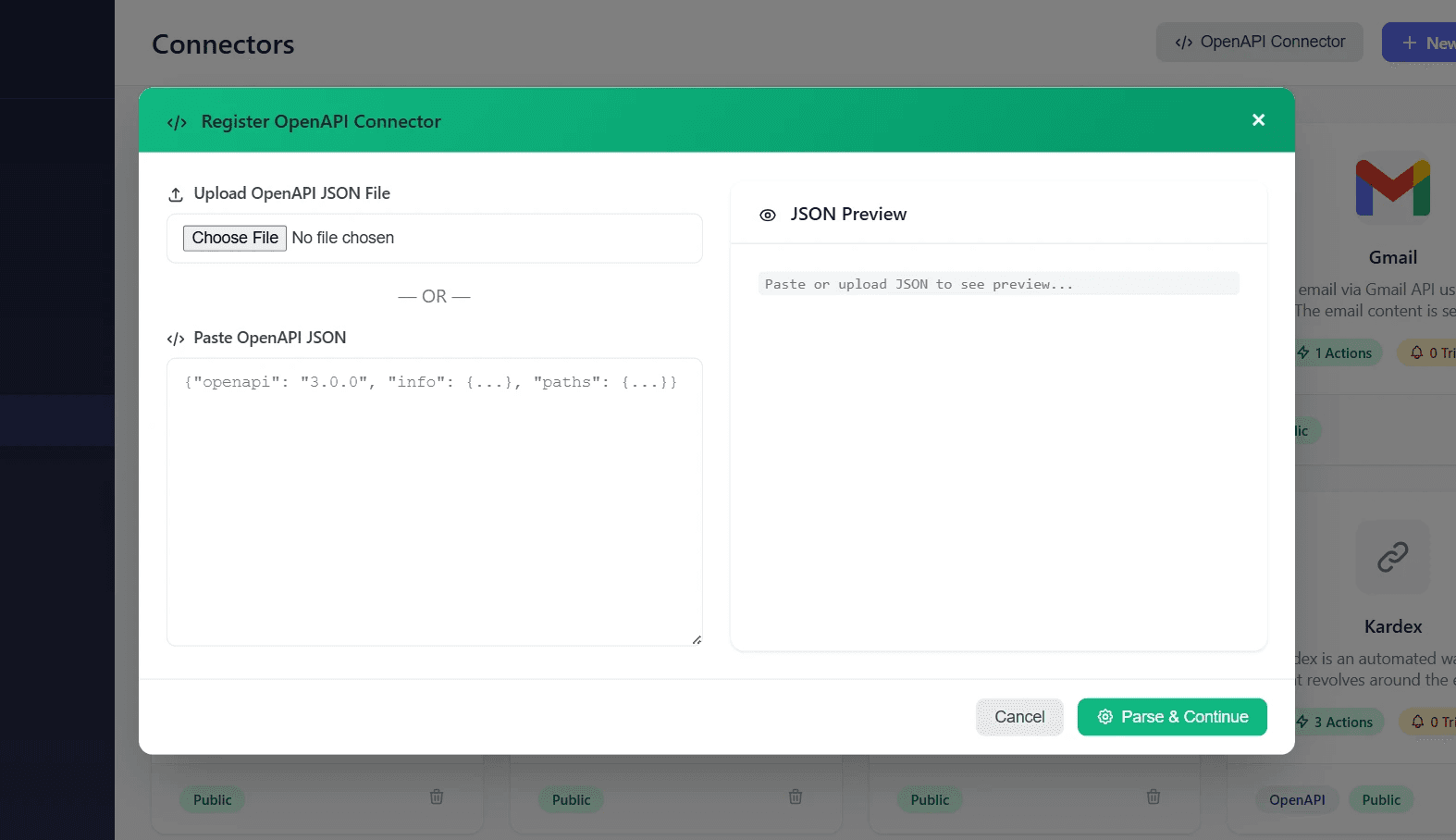
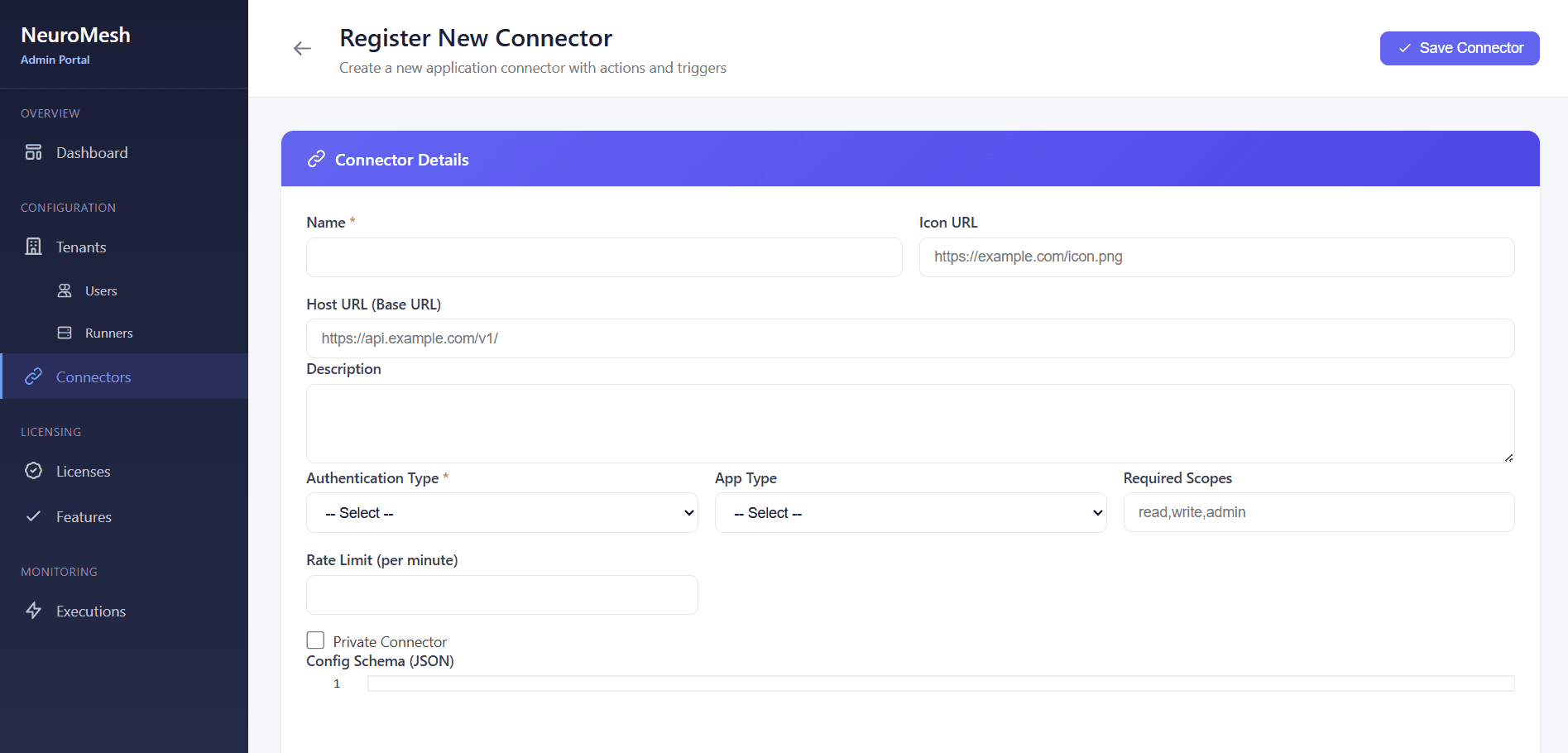
A key capability of NeuroMesh lies in its ability to generate API connectors directly from OpenAPI 3.0 specifications. By importing an OpenAPI definition, the platform automatically creates the foundational connector structure and exposes API endpoints as reusable actions within the workflow environment.
Rather than enforcing rigid request and response formats, NeuroMesh provides the flexibility to configure request parameter mappings and apply response transformations within workflows. This ensures that integrations can adapt to varying API schemas and evolving requirements, while still benefiting from automated connector generation. As a result, teams can eliminate repetitive boilerplate code without sacrificing control or customization.
Designing API Orchestration Workflows
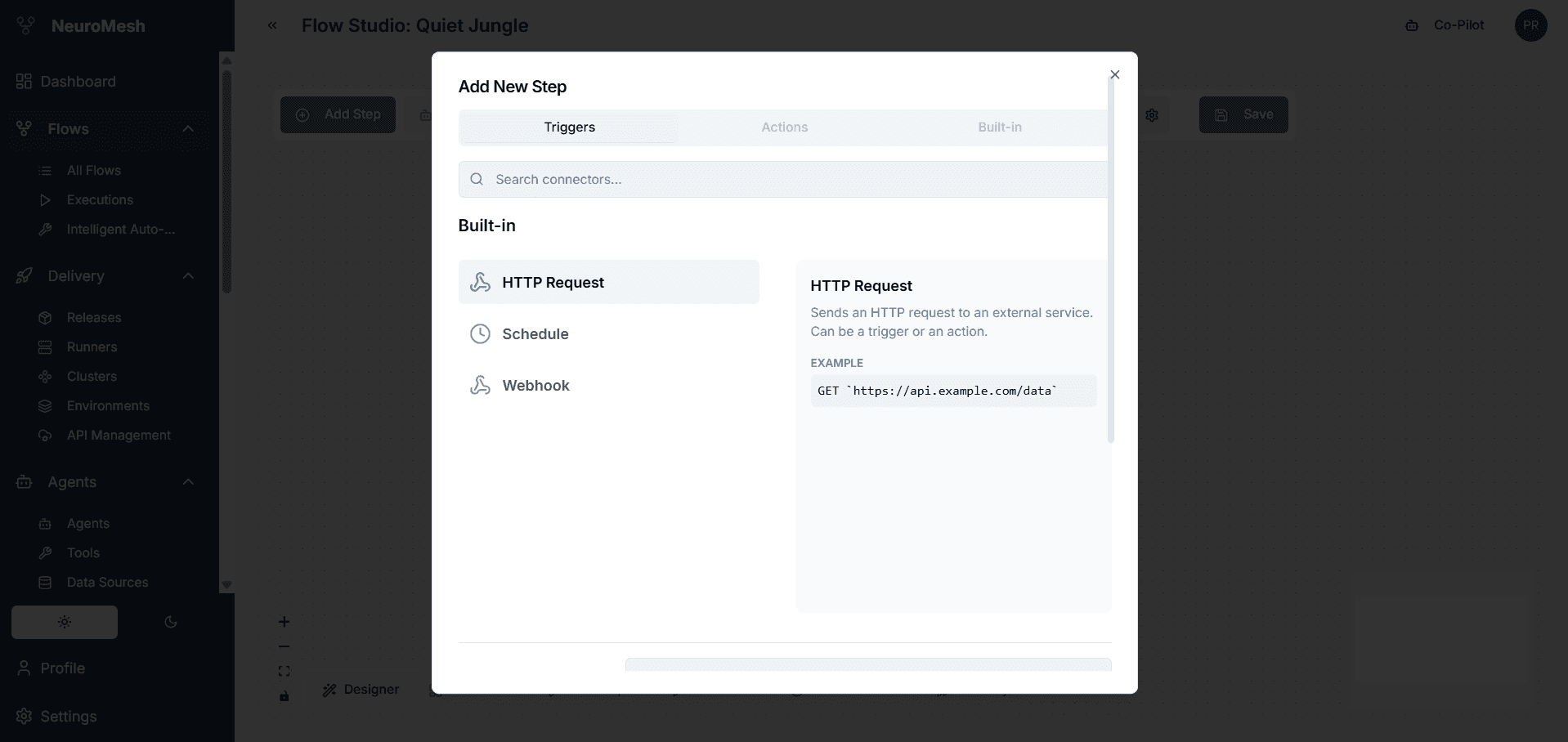
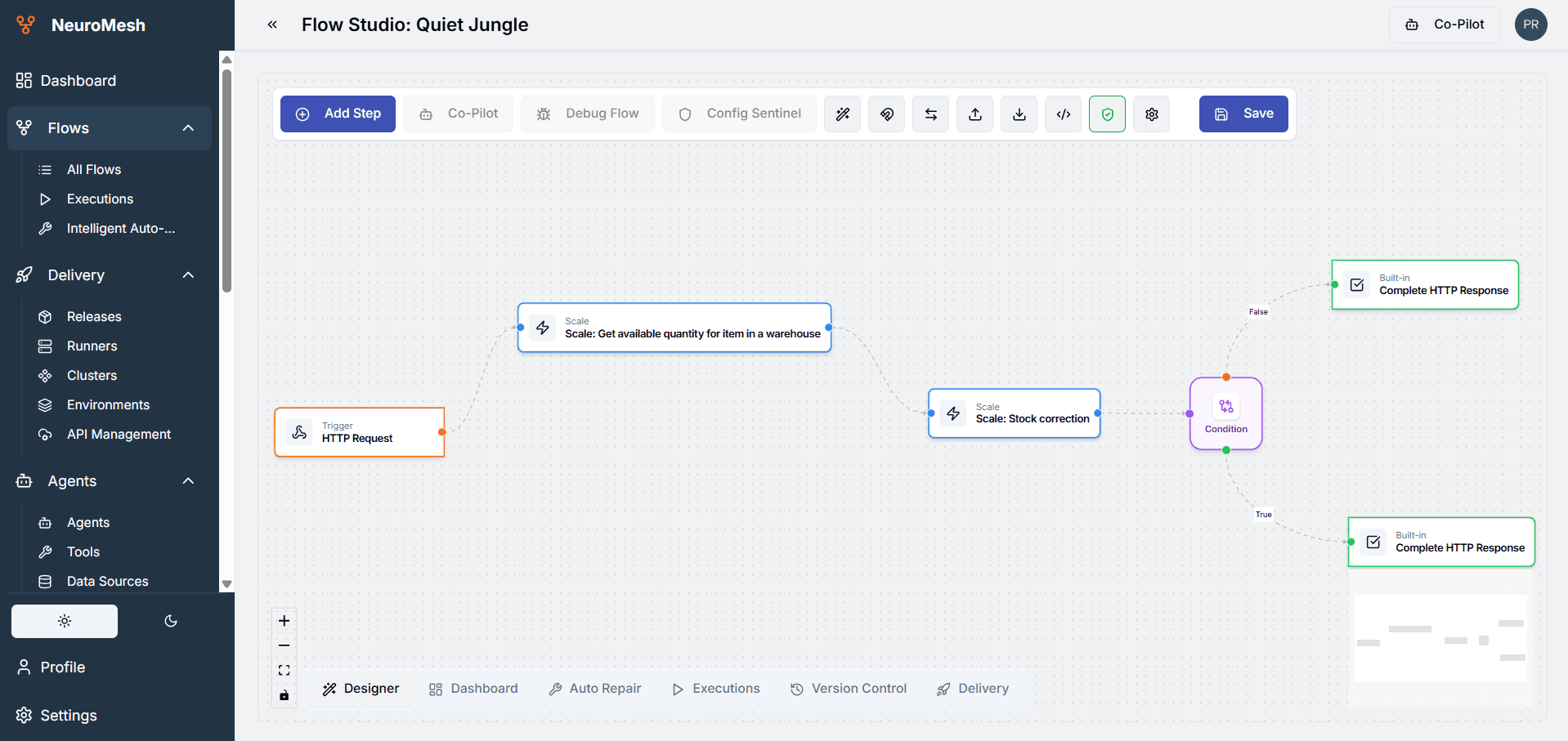
Once connectors are available, workflows can be constructed through an intuitive visual interface. These workflows typically begin with an incoming request, followed by validation, data retrieval from multiple APIs, application of business logic, and finally the generation of a response.
Each step in the workflow is represented as a node, enabling developers to clearly visualize the execution path and data flow. This approach not only simplifies development but also improves maintainability and transparency across integration processes.
Use Case: Stock Correction Workflow
A practical example of NeuroMesh in action is a stock correction workflow within an inventory management system. In this scenario, the workflow receives an inventory update request, evaluates current stock levels, applies the necessary corrections, and returns the updated result.
Within NeuroMesh, each of these steps is represented visually as part of the workflow. Business logic is implemented using configurable conditions and transformations, while API interactions are handled through the previously generated connectors. This modular approach enables rapid iteration and clear visibility into how data flows through the system.
Scaling Integration and Developer Productivity with NeuroMesh
NeuroMesh enables scalable integration by combining reusable connectors with a flexible, workflow driven architecture. Connectors generated from OpenAPI specifications can be reused across multiple workflows, reducing duplication and ensuring consistency. At the same time, workflows can be updated independently of underlying services, allowing teams to adapt quickly to changing requirements.
The platform’s optimized execution engine supports concurrent workflows, making it suitable for high throughput environments, while its support for cloud, on-premise, and hybrid deployments ensures flexibility in scaling.
By eliminating repetitive integration code, NeuroMesh also improves developer productivity. Teams can focus on business logic through a visual workflow interface, resulting in faster development cycles and easier maintenance.
Enterprise Grade Capabilities
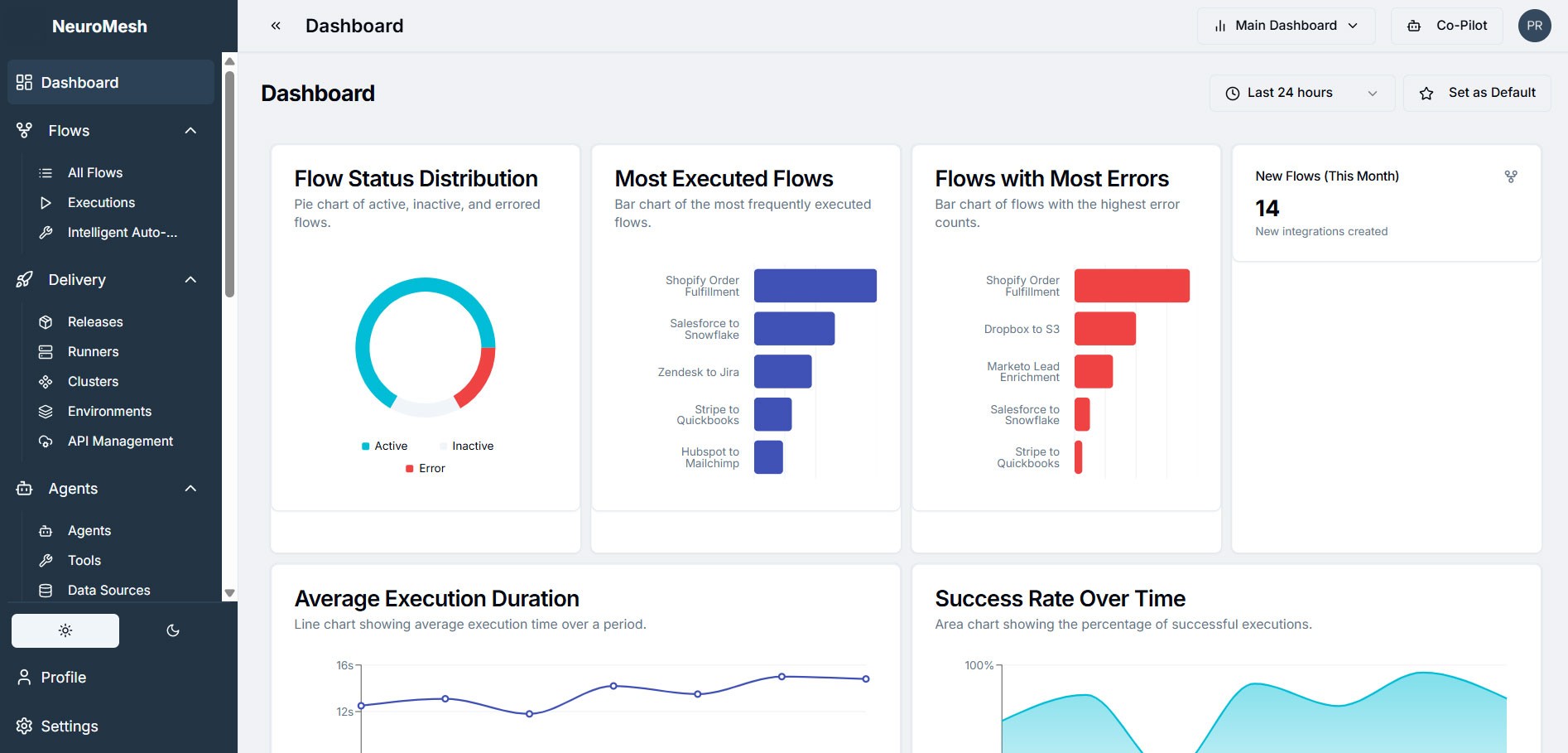
NeuroMesh is built to meet the demands of enterprise grade systems. It provides secure API handling, robust error management with retry mechanisms, and comprehensive logging and monitoring capabilities. Role based access control ensures that workflows and integrations can be managed securely across teams.
These features enable organizations to operate integrations reliably while maintaining visibility and control over their systems.
Flexible Deployment Options
NeuroMesh offers flexibility in how and where it is deployed. Organizations can choose to run it in the cloud for scalability, on-premise for enhanced security and compliance, or in a hybrid configuration that balances both needs. This adaptability ensures that NeuroMesh can align with a wide range of infrastructure strategies.
Conclusion
As the number of APIs within modern systems continues to grow, manual integration approaches are no longer viable. They introduce unnecessary complexity, slow down development, and hinder scalability.
NeuroMesh provides a more efficient alternative by enabling visual API orchestration and automated connector generation through OpenAPI 3.0. By combining automation with flexibility, it allows teams to build scalable, maintainable integration layers without the burden of repetitive coding.
The result is a faster, more streamlined development process and a more resilient system architecture.
Share Blog